

Automated Medical Device Validation Using LabVIEW & NI DAQ for EMG-EIM Diagnostic Systems
March 12, 2026
Connected Care Through IoMT: The Future of Healthcare Innovation
May 14, 2026Automated Medical Device Validation Using LabVIEW & NI DAQ for EMG-EIM Diagnostic Systems
March 12, 2026Connected Care Through IoMT: The Future of Healthcare Innovation
May 14, 20267 min Read
7 Key Women's Health Issues in India: PCOS, Fertility, Menopause & Daily Wellness
Dr. B. R. Kalpana, Hamilton Hospital
Understanding women's health in India doesn't have to be complicated. Yet for millions of women - from young professionals dealing with PCOS to mothers navigating pregnancy and older women facing menopause - reliable, easy-to-understand health guidance has always been hard to find.
That's exactly why iORBIT brings you this expert series. In this video, Dr. Kalpana, a senior gynaecologist and high-risk obstetrician at Hamilton Bailey Hospital, Bangalore, breaks down the most important gynaecology topics every Indian woman should know - from menstrual health and fertility to pregnancy care, PCOS, and menopause. Simple language. Trusted guidance. Zero jargon.
Menstrual Health: What's Normal and What Isn't
Menstrual health is the foundation of women's wellness, yet it remains one of the most undertalked topics in India. Many women silently endure irregular cycles, pain, or heavy bleeding - assuming it's "just the way it is."
Dr. Kalpana explains that tracking your menstrual cycle is the single most powerful habit a woman can build. Today, free apps on Android and iOS let women log their cycle, predict ovulation, and spot irregularities - often catching conditions like PCOS or early pregnancy before a doctor visit.
- A normal cycle is 21–35 days - variations outside this need attention
- Missed or delayed periods are early signals worth investigating
- Digital tracking tools are helping Indian women detect problems earlier than ever
PCOS in India: Why Urban Women Are Most at Risk
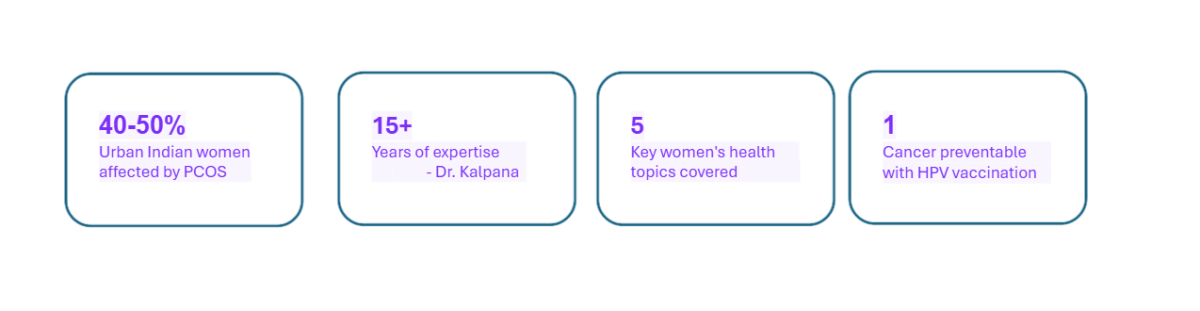
PCOS (Polycystic Ovary Syndrome) has become the most searched women's health condition in India - and for good reason. Dr. Kalpana observes PCOS in 40–50% of urban women she sees, particularly in tech-heavy cities like Bangalore.
Why is PCOS rising in urban India?
- Night shifts and American/European work hours disrupting the body's circadian rhythm
- Irregular eating habits - skipping meals or eating late
- High workplace stress and demanding performance targets
- Sedentary lifestyle with little physical activity
- Emotional strain from balancing work, relationships, and personal goals
"Everything is playing a role. Women forget they need a holistic approach - diet, exercise, sleep, emotional health, and mental well-being all matter." - Dr. Kalpana
The encouraging news: women who track their cycles are catching PCOS symptoms earlier - making lifestyle changes more effective and outcomes far better.
3. Fertility Awareness: What Every Woman Should Know
Fertility health in India is changing. Young women today are far more informed about ovulation, conception windows, and reproductive health than previous generations - largely thanks to digital tools and platforms like iTouch iOrbit that make medical knowledge accessible.
Key fertility insights from Dr. Kalpana:
- Ovulation tracking apps help women understand their fertile window accurately
- PCOS is one of the leading causes of fertility challenges in Indian women
- Early diagnosis and lifestyle correction significantly improve fertility outcomes
- Both partners play a role - fertility is not a "women-only" conversation
4. Pregnancy Care in India: The Rise of Telemedicine
Pregnancy care in India is being transformed by technology. For women in traffic-heavy cities, telemedicine is reducing the stress, travel, and exposure risk of frequent hospital visits - without compromising the quality of monitoring.
What modern pregnancy apps and telemedicine now enable:
- Remote fetal heart rate monitoring (NST) - data sent directly to the doctor
- Real-time teleconsultations for routine checkups
- Reduced exposure to hospital-based infections
- Better continuity of care, especially for high-risk pregnancies
Dr. Kalpana, who specialises in high-risk obstetrics, highlights that home-based monitoring combined with telehealth has made a real difference - particularly for working mothers who cannot afford to take frequent time off.
5. HPV Vaccination in India: A Critical Step Toward Cancer Prevention
HPV (Human Papillomavirus) vaccination is one of the most important preventive healthcare steps available in India today. It protects against cervical cancer - the second most common cancer in Indian women - yet awareness, especially in rural areas, remains alarmingly low.
- The HPV vaccine is recommended for both boys and girls
- Urban awareness is growing through campaigns by Rotary, NGOs, and hospitals
- Pap smear screening - critical for early detection - is still widely underused
- Rural India has a significant awareness gap that needs urgent attention
- Parliamentary discussions are underway to make HPV vaccination free and routine across India
"Both boys and girls need to take the HPV vaccine. I hope it becomes a free, routine vaccination in India's national program very soon." - Dr. Kalpana
6. A Holistic Approach to Women's Everyday Wellness
Whether it's menstrual health, PCOS management, or fertility - the common thread in women's everyday wellness is a holistic lifestyle. Dr. Kalpana emphasises five core pillars:
- Diet - eat balanced, home-cooked meals at consistent times
- Exercise - at least 30 minutes of movement daily
- Sleep - align your sleep cycle with your body's natural circadian rhythm
- Emotional health - manage stress, relationships, and mental load actively
- Mental and spiritual well-being - meditation, mindfulness, and a sense of purpose
This framework applies at every stage - from a young woman managing PCOS to someone going through menopause. The body responds to balance.
7. Menopause in India: The Most Neglected Chapter in Women's Health
Menopause and perimenopause remain deeply undertreated in India. Women in their 40s and 50s often prioritise everyone else in the family - and quietly ignore their own changing health needs.
What women going through menopause in India face:
- Bone density loss and increased osteoporosis risk
- Significant hormonal shifts and mood changes
- Empty nest syndrome - emotional challenges as family dynamics change
- Cardiovascular and metabolic health changes
Rather than jumping to hormone replacement therapy (HRT), Dr. Kalpana recommends a holistic first approach — yoga, meditation, proper nutrition, emotional support, and regular bone density monitoring. Menopause is a natural transition, not a condition to fear.
Frequently Asked Questions: Women's Health in India
1. What causes PCOS in urban Indian women?
PCOS in urban Indian women is primarily caused by disrupted sleep due to night shifts, poor diet, high workplace stress, and a sedentary lifestyle. These factors disturb the body's hormonal balance. Dr. Kalpana notes up to 40–50% of urban women may be affected.
2. How can I track my menstrual health at home?
Free menstrual and ovulation tracking apps (available on Android and iOS) help women monitor cycle regularity, predict ovulation, and flag irregularities early — often before a formal diagnosis is needed.
3. Is HPV vaccination important for girls in India?
Yes - and for boys too. HPV vaccination prevents cervical cancer and is strongly recommended before sexual activity begins. Efforts are underway to include it in India's national free immunization program.
4. How does telemedicine help pregnant women in India?
Telemedicine allows pregnant women to monitor fetal health remotely using apps, share heart rate and NST data with their doctor, and have consultations from home - reducing travel, stress, and infection risk significantly.
5. What is the best approach to manage menopause naturally in India?
Yoga, meditation, balanced nutrition, daily exercise, emotional support, and bone density monitoring form the best holistic plan. Hormone replacement therapy is an option but should complement - not replace - lifestyle care.