Non-Contact Infrared Thermometer Design for Rapid Temperature Screening
September 3, 2026Non-Contact Infrared Thermometer Design for Rapid Temperature Screening
September 3, 2026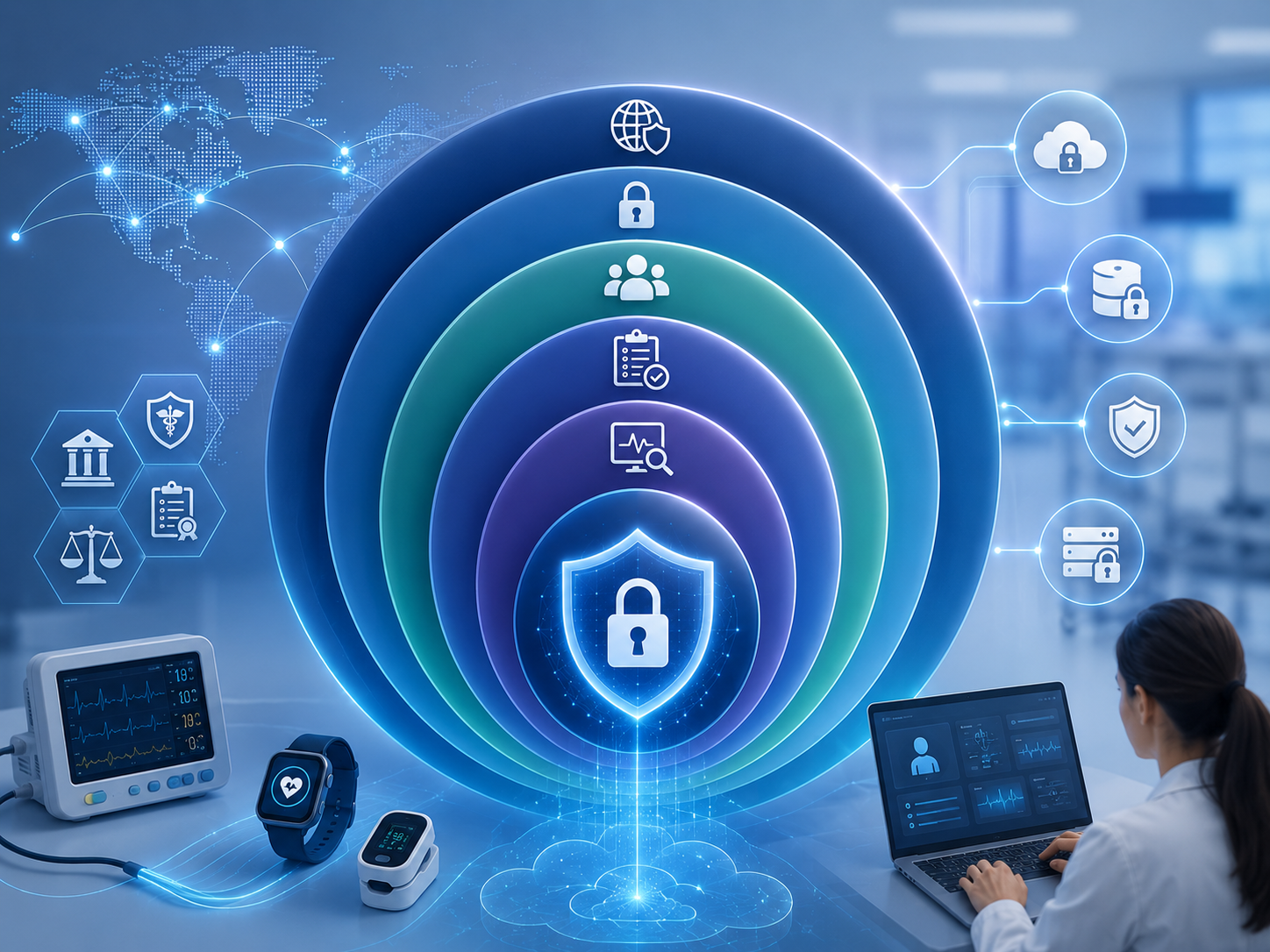
Data Security in Digital Health: How iTouch Ensures Compliance and Patient Trust
Privacy, role-based access, and global regulatory alignment - the five layers that protect patient data across the iTouch platform.
In connected healthcare, every data stream is a promise to the patient: their information will be protected, used appropriately, and kept private. Breaking that promise - through a breach, a compliance gap, or a careless permission setting - does not just risk fines; it destroys trust. This article explains the five security layers built into iTouch, from global regulatory alignment to continuous monitoring, and shows why data security in digital health is not a feature to be added later but a foundation to be built from the start.
Digital health platforms handle some of the most sensitive data in the world: patient vitals, diagnoses, imaging, medication histories, and genomic information - all flowing in real time between devices, systems, and care teams. The clinical value of connecting this data is enormous. But so is the responsibility.
A single security failure in a healthcare platform can compromise patient safety, expose the organization to regulatory penalties, and - most importantly - erode the trust patients place in their care providers. This is why data security in digital health must be treated as a design principle, not an afterthought. iOrbit's approach, detailed in our cybersecurity-by-design guide, builds security into every layer of the iTouch IoMT Cloud Platform.
Why Data Security in Digital Health Is Different
Healthcare is not like e-commerce or social media. The data is more sensitive, the consequences of a breach are more severe, and the regulatory landscape is more complex:
- Patient safety is at stake. A compromised infusion pump or patient monitor is not just a data problem - it is a potential clinical harm.
- Regulations span multiple jurisdictions. A platform serving hospitals globally must satisfy HIPAA in the US, GDPR in Europe, CDSCO in India, and a growing list of regional data-protection laws - simultaneously.
- Data flows are continuous. Unlike a one-time transaction, connected care generates a constant stream of identifiable health data from devices, wearables, and EHRs, every second of every day.
- Trust is fragile. Patients and clinicians will not adopt digital health tools they do not trust. One publicized breach can set adoption back years.
5 Security Layers Built into iTouch
Rather than treating security as a single feature or a final checkbox, iTouch is architected with five concentric layers of protection. Each layer addresses a different dimension of risk.
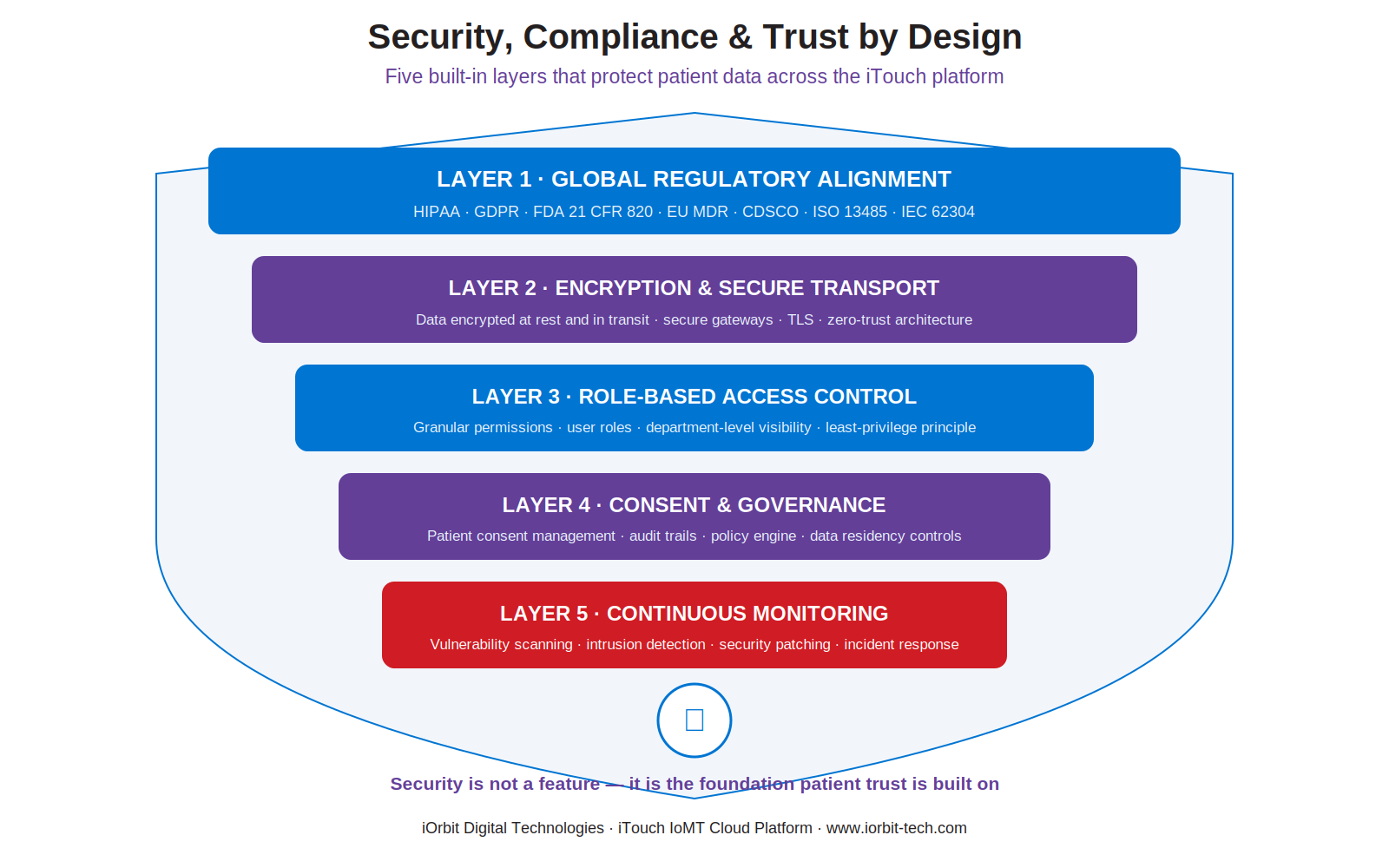
Figure 1: Five concentric security layers protect patient data across the iTouch platform - from global compliance on the outside to continuous monitoring at the core.
Layer 1: Global Regulatory Alignment
The outermost layer ensures the platform meets the regulatory requirements of every market it serves. iTouch is built to align with HIPAA, GDPR, FDA 21 CFR Part 820, EU MDR, CDSCO, ISO 13485, and IEC 62304. Compliance is not a bolt-on certification - it is engineered into the architecture from the first line of code. iOrbit's regulatory affairs and quality management team ensures every feature, workflow, and data path meets the standards regulators expect.
2: Encryption & Secure Transport
All data is encrypted at rest and in transit. Secure gateways and TLS protocols protect information as it moves between devices, the platform, and clinical systems. A zero-trust approach means no connection is assumed safe - every request is authenticated and authorized before data is exchanged.
3: Role-Based Access Control
Not everyone in a hospital needs access to the same data. iTouch enforces granular, role-based access control (RBAC) so that each user - administrator, clinician, nurse, technician, or researcher - sees only what their role requires. Permissions are managed at the department and facility level, following the principle of least privilege: access the minimum necessary, nothing more.
4: Consent & Governance
Patient consent is not a one-time checkbox. iTouch includes a policy engine and consent management framework that governs how data is collected, stored, shared, and retained. Full audit trails record every access event, and data-residency controls ensure information stays where regulations require it to be.
5: Continuous Monitoring
Security is not a state - it is a process. The innermost layer provides continuous vulnerability scanning, intrusion detection, security patching, and incident-response readiness. Threats evolve daily; the platform's defenses must evolve with them.
Notice that these layers work together, not independently. Regulatory alignment defines the rules. Encryption and access control enforce them technically. Consent and governance enforce them ethically. And continuous monitoring ensures they hold up over time. Security, compliance, and trust are not three separate goals - they are three facets of the same commitment.
How iTouch Builds Patient Trust
Security architecture matters to IT teams. But what patients and clinicians experience is trust - the confidence that their data is safe, their privacy is respected, and the systems they depend on are reliable. iTouch earns that trust through:
- Transparency. Audit trails and consent records make it clear who accessed what, when, and why.
- Consistency. The same security framework applies whether data flows through a bedside monitor, a wearable at home, or a third-party EHR integration.
- Accountability. Governance policies are enforceable, auditable, and aligned with the expectations of regulators in every market.
For a broader look at how these principles apply across connected devices, see our article on the rise of cloud-connected medical devices and the security considerations that come with them.
What Administrators Should Ask
When evaluating any digital health platform for security and compliance, five questions cut through the noise:
- Which regulations does the platform comply with today - and how is compliance maintained as regulations change?
- Is data encrypted at rest and in transit, with zero-trust access?
- How granular is role-based access control - can you restrict by role, department, and facility?
- Does the platform manage patient consent and maintain full audit trails?
- What continuous monitoring and incident response capabilities are in place?
In digital health, security is not a feature - it is the foundation patient trust is built on. iTouch protects that trust through five built-in layers: global regulatory alignment, encryption and secure transport, role-based access control, consent and governance, and continuous monitoring. Together, these layers ensure that the clinical value of connected care never comes at the cost of patient privacy, safety, or confidence.
Secure Your Connected Care Foundation
If data security and regulatory compliance are priorities for your next digital health initiative, explore how iOrbit approaches cybersecurity by design and see the iTouch IoMT Cloud Platform in action. For regulatory strategy and QMS consulting, visit Regulatory Affairs & Quality Management.