Transforming Care Delivery in Eldercare Homes with a Human-Centered Connected Care Solution
January 22, 2026
Implementing Test Automation Across the Medical Device Development Life Cycle for Medical Device Validation
March 3, 2026Transforming Care Delivery in Eldercare Homes with a Human-Centered Connected Care Solution
January 22, 2026Implementing Test Automation Across the Medical Device Development Life Cycle for Medical Device Validation
March 3, 2026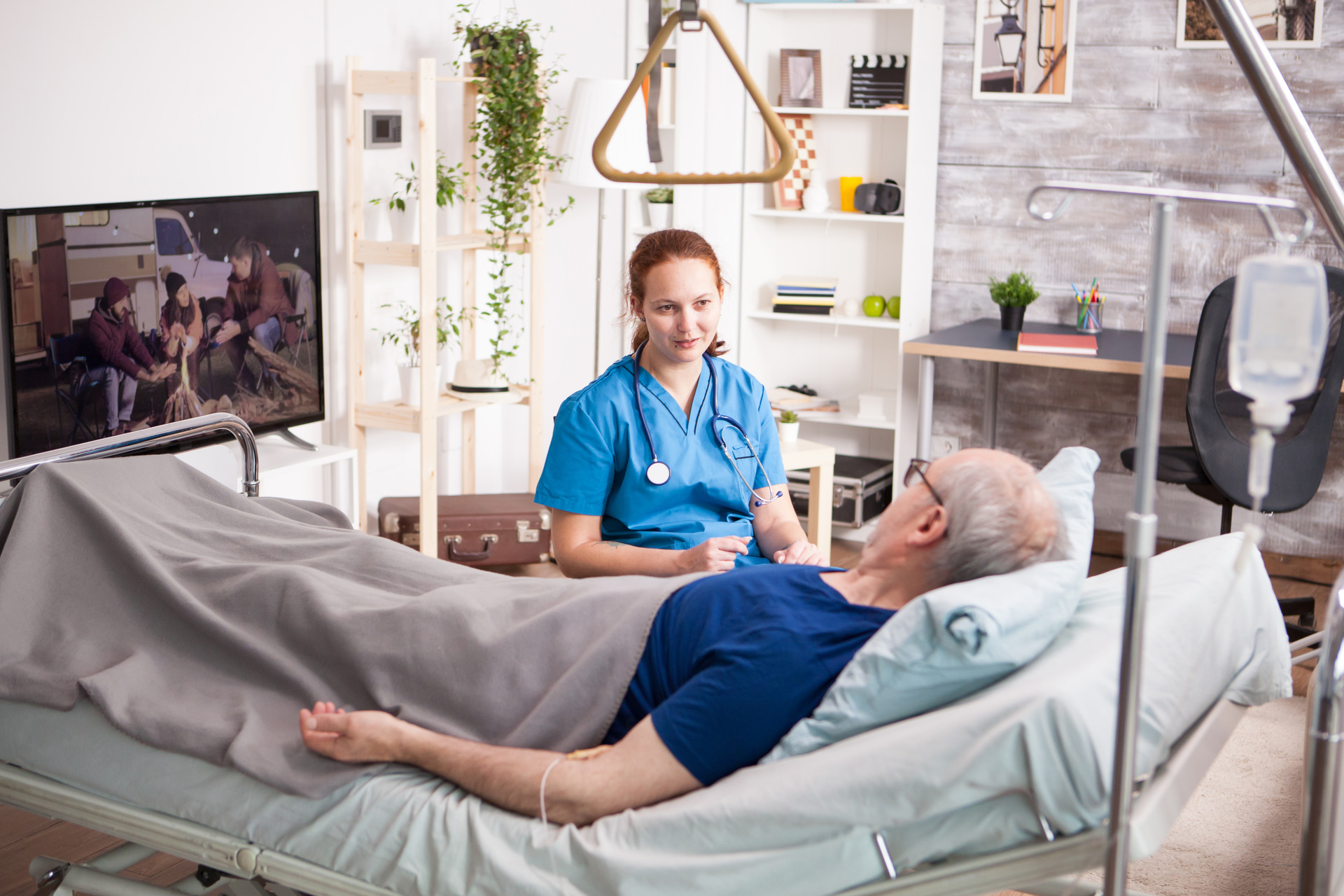
Beyond Hospital Discharge: How Connected Care Enables Continuous Patient-Centric Care at Home
For most hospitals, discharge is often treated as the end of care. The patient leaves the hospital stable, the bed is freed, and care formally “ends.”
In reality, the patient’s journey doesn't end there. For patients and families, recovery happens at home without nurses nearby, without monitors at the bedside and without immediate access to clinical teams. For hospitals, this period is largely invisible. For patients and families, it’s filled with uncertainty.
True patient-centric care doesn’t stop at discharge. It simply changes location.
The Reality After Discharge - Gap between Hospital and Home
In many hospital systems, post-discharge care is usually built on instructions and follow-up dates.
A cardiac patient returns home with instructions, prescriptions, and a follow-up date. A post-surgical patient is advised to watch for symptoms and report changes. An elderly patient with chronic conditions is expected to manage vitals at home.
But what happens in between visits? A lot can change between these touchpoints.
A diabetic patient may struggle to keep readings stable. A cardiac patient’s weight may slowly increase. A post-operative patient may ignore early warning signs, assuming they’re “normal.”
By the time they return to the hospital, these small changes have often turned into complications. This is not because care teams failed - it’s because they had no visibility beyond discharge.
Why Continuity matters - Care that Travels with the Patient
Hospitals are treating sicker patients, earlier discharges are common, and families are expected to manage more care at home. At the same time, teleconsultations and remote monitoring are becoming routine.
But without continuity, these efforts remain fragmented.
When telehealth operates separately from hospital records, clinicians rely heavily on patient recall. When home monitoring data isn’t connected to clinical history, trends lose meaning. The result is reactive care—intervening only when problems become obvious.
Continuity changes this equation.
Connected Care in Practice
In many hospital systems, follow-ups are moving to virtual formats to reduce travel and waiting times. But telehealth works best when it’s connected to the patient’s history.
Consider a heart failure patient discharged from a multi - specialty hospital. At home, daily vitals are captured. During a virtual follow-up, the clinician doesn’t start from scratch. They see discharge notes, medication changes, and post-discharge trends in one place.
Instead of asking, “When did this start?”, they can say, “We’re seeing a pattern - let’s act now.”
In some Indian hospitals running home care programs, nurses supporting patients remotely report fewer emergency escalations because early signals are easier to spot.
Care becomes proactive, not rushed. Families feel reassured knowing someone is watching over the patient even after discharge. Small changes, but meaningful ones.
Impact for Patients, Clinicians and Hospitals
For patients, continuity brings reassurance. They feel supported even when they’re not physically in the hospital.
For clinicians, it reduces blind spots. Decisions are based on patterns, not assumptions.
For hospitals, the benefits are measurable - fewer avoidable readmissions, better chronic disease control, and more efficient use of beds and staff for those who truly need them.
Continuity builds trust. Patients are more likely to return to a system that stays with them beyond discharge.
A Strategic Shift
The future of healthcare isn’t limited to buildings. Continuity beyond hospital walls is no longer optional. It’s about staying connected to patients wherever they are at home, on a video call, or in a step-down facility.
This shift requires unified patient records that flow seamlessly from hospital care to remote monitoring and telehealth. Not as separate programs, but as one continuous care journey.
Platforms like iTouch are designed to support this approach, helping hospitals maintain a consistent, connected view of the patient wherever care happens even beyond discharge.
Care doesn’t end at hospital discharge.
If your organization is thinking about extending support to patients safely and intelligently beyond the hospital walls, explore how a unified patient data approach with iTouch can support continuity that truly centers on the patient wherever they are.