

iTouch Performance Metrics: 6 Proven Results
September 17, 2026iTouch Performance Metrics: 6 Proven Results
September 17, 2026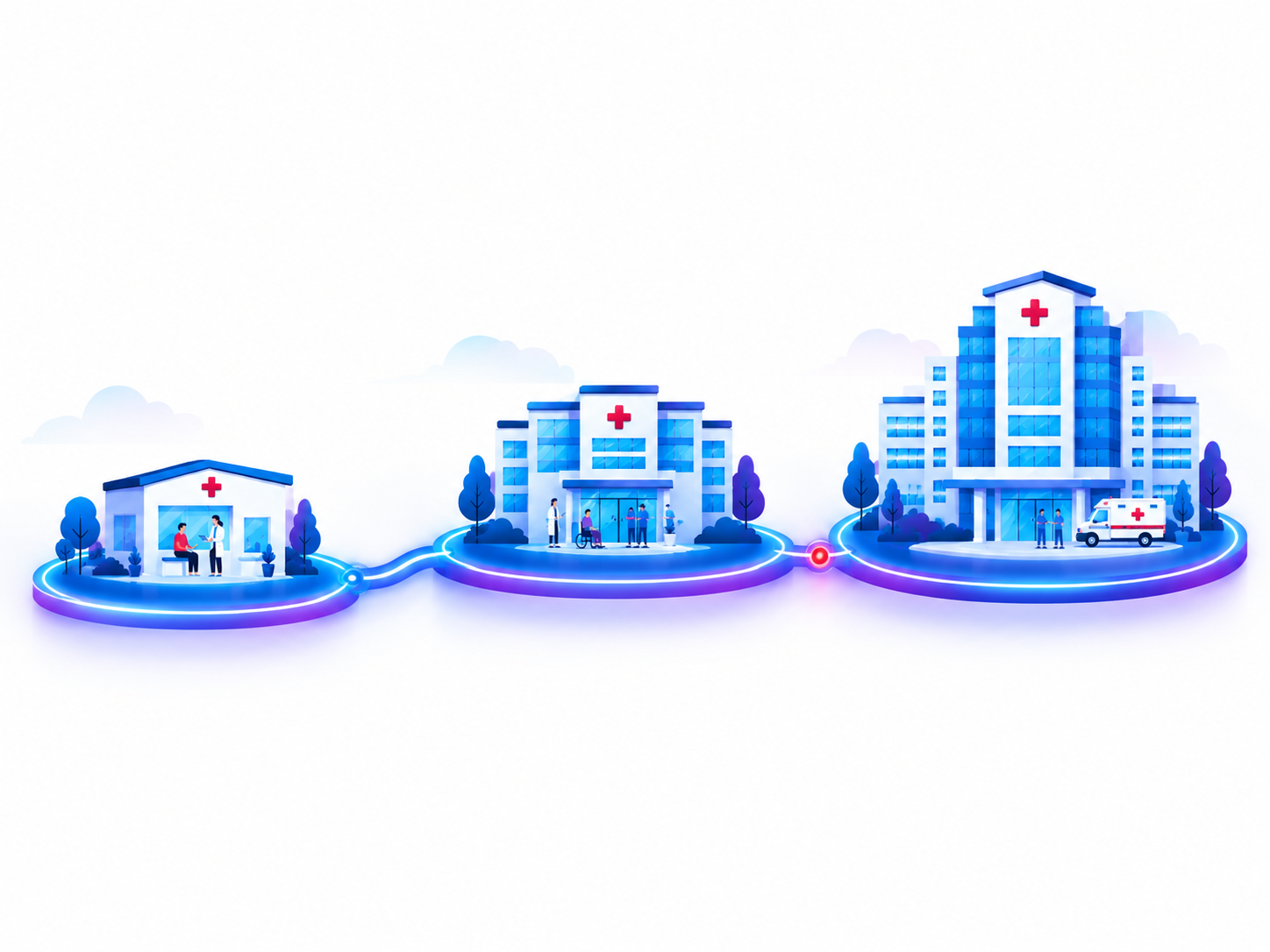
Scaling Healthcare Networks: How Modular Platforms Transform Digital Expansion
How iTouch scales from a single clinic to a large hospital network — without forcing a re-platform at every stage of growth.
Healthcare organizations rarely stay the size they started at. A single clinic becomes a multi-site group; a regional hospital becomes a network. The problem is that most digital health platforms weren't built to grow with you - they were built for the size you were on day one, forcing a painful re-platform every time you expand. This article explains how a modular, multi-layered architecture lets iTouch scale from a handful of devices in one clinic to thousands of devices across a hospital network, without starting over.
Growth should be a milestone to celebrate, not an IT emergency. Yet for many healthcare organizations, expanding - adding a new clinic, merging with another provider, opening a second facility - triggers exactly that: a scramble to figure out whether the systems that worked for one location can survive the jump to five, or fifty.
The root cause is almost always the same: the platform was designed and sized for a single scale, and scaling healthcare networks was never part of its architecture. Bolting on more capacity becomes a series of workarounds rather than a natural extension.
Why Healthcare Platforms Struggle to Scale
Three patterns explain why so many digital health tools hit a wall as organizations grow:
- Built for one size. Systems designed around a single clinic's device count and user base often can't handle the data volume or concurrency of a multi-site network without a costly overhaul.
- Rigid, monolithic architecture. When every feature is tightly bundled together, adding capacity for one part of the system means touching all of it - slow, risky, and expensive.
- Inconsistent standards across sites. Without a shared platform, each new facility tends to bring its own tools, creating fragmented data and duplicated effort instead of one unified network.
What Makes a Platform Actually Scalable
A genuinely scalable platform is built on a modular architecture - independent components that can each be expanded, upgraded, or added to without disrupting the rest of the system. This is the foundation of iTouch's approach to scaling healthcare networks.
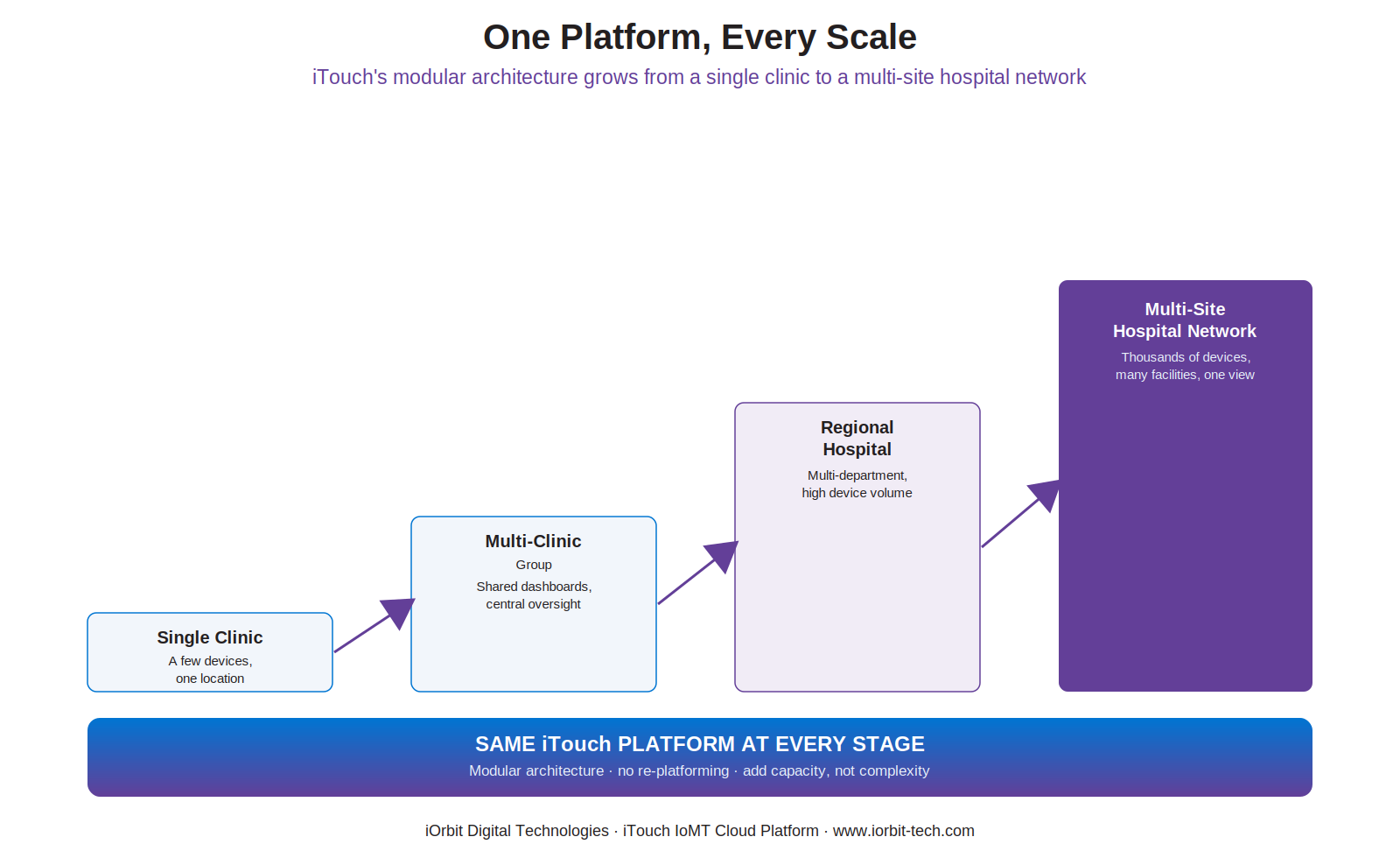
Figure 1: The same iTouch platform supports every stage of growth - from a single clinic to a multi-site hospital network - through modular architecture, not re-platforming.
From Single Clinic to Hospital Network: 4 Stages
Stage 1: Single Clinic
A small clinic starts with a handful of connected devices - a monitor here, a diagnostic tool there. At this stage, the priority is simplicity: fast setup, minimal IT overhead, and a platform that doesn't require a dedicated technical team to run.
Stage 2: Multi-Clinic Group
As a practice expands to multiple locations, the need shifts to shared visibility — a central dashboard that lets administrators see device status and patient data across every site, without logging into separate systems for each one.
Stage 3: Regional Hospital
At hospital scale, device volume grows into the hundreds or thousands, spanning multiple departments with different clinical needs. The platform now has to support department-specific workflows while still feeding one unified data layer.
Stage 4: Multi-Site Hospital Network
At full network scale, the platform must support thousands of devices across many facilities, often in different regions or even countries - with consistent security, compliance, and a single administrative view across the entire network.
5: Continuous Monitoring
Security is not a state - it is a process. The innermost layer provides continuous vulnerability scanning, intrusion detection, security patching, and incident-response readiness. Threats evolve daily; the platform's defenses must evolve with them.
Notice what stays constant across all four stages: the underlying platform. Only the scale changes - more devices, more sites, more users - not the system itself. That's what modular architecture delivers: capacity that expands to meet growth, without the disruption of switching platforms every time the organization outgrows the last one.
How iTouch's Modular Architecture Works
iTouch is architected in independent layers, so growth in one area doesn't require rebuilding the rest:
- Device connectivity layer. Add new devices or entire facilities without reconfiguring the systems already in place.
- Data and integration layer. Standardized HL7/FHIR data flow scales in volume without requiring new integration work at each site.
- Application and dashboard layer. New facilities, departments, or user roles are added through configuration, not custom development.
- Security and governance layer. Consistent compliance and access control policies apply automatically as the network grows, rather than being re-implemented per site.
This modular design is also why iTouch supports flexible cloud, hybrid, and on-premises deployment — a growing network can mix deployment models across sites as needed, rather than being locked into one infrastructure choice from day one.
What Administrators Should Evaluate
When assessing whether a platform can genuinely support your growth plans, ask:
- Can new sites be added through configuration, or does each one require a custom project?
- Does the platform's pricing and performance scale predictably, or does cost spike unpredictably with volume?
- Will security and compliance policies apply automatically across new facilities?
- Has the vendor actually supported organizations through this kind of growth before?
Growth shouldn't force a technology restart. A modular platform architecture is what allows scaling healthcare networks to happen smoothly - from a single clinic to a multi-site hospital network - without the cost, risk, and disruption of switching systems at every stage. With iTouch, the platform grows with the organization, not against it.
Grow Without Starting Over
If your organization is planning its next phase of growth, choosing a platform built for scale from the start makes every future expansion easier. Explore how the iTouch IoMT Cloud Platform supports organizations at every stage, from a single clinic to a full hospital network.